
By LZH | 21 June 2023 | 0 Comments
Oxidation with Manganese Dioxide
What is manganese dioxide?
Manganese dioxide can oxidize alcohols to ketones or aldehydes, and the reaction proceeds via a radical intermediate (see below), producing MnO (Mn2+) as the by-product. Manganese dioxide oxidizes primary and secondary alcohols to the aldehyde or ketone, respectively, in neutral media.156 Ball et al. discovered this reaction by precipitating manganese dioxide and converting vitamin A (104) to retinal (105) in 80% yield. Manganese dioxide is most helpful in oxidizing allylic and benzylic alcohols. In a synthesis of sordaricin,162 Mander and Thomson corrupted the allylic alcohol unit in 110 to conjugated aldehyde 111 in >86% yield using manganese dioxide. The oxidation of alcohols by manganese dioxide is influenced by the steric encumbrance around the carbon bearing the hydroxyl moiety. In general, there is no significant difference in the oxidation rate of cis- and trans-isomeric alkenes, and there appears to be little or no cis/trans isomerization during the oxidation. The cis- or trans-2-methyl-2-penten-1-ol reaction with MnO2 led to either the cis- or the trans-aldehyde in 64% or 83% yield, respectively.163, Boehm et al. noted that some cis-trans isomerization occurred in similar oxidation of pentadienols and pentenyl.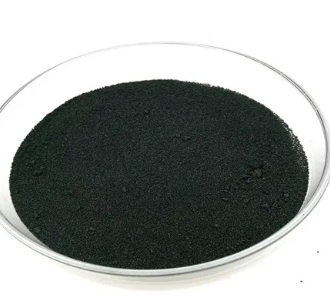 Oxidation with Manganese Dioxide
Although manganese dioxide (MnO2) is a common form of Mn(IV), it is relatively insoluble in most organic solvents. Manganese dioxide is the usual end-product of permanganate oxidations in basic solution (sec. 3.5.A). The reduction potential of MnO2 is 1.208 volts for the following reaction. There are several ways to prepare this reagent, and the preparation method strongly influences its oxidizing power.156 One of the more common methods involves the precipitation of MnO2 from a warm aqueous solution of MnSO4 and KMnO4 at a particular pH. The precipitated reagent is then activated by heating to 100-200°C or higher158 for several hours. The solvent used for the oxidation is essential since the reaction proceeds by coordinating both substrate and reagent to the MnO2. The solvent can influence the degree of adsorption and desorption of the alcohol on the manganese dioxide. If primary or secondary alcohol is used as the solvent, competition for adsorption sites with the alcohol will diminish the yield of oxidation products. Many other solvents can be used, including alkanes (petroleum ether, cyclopentane), chlorinated hydrocarbons (CH2Cl2, CHCl3), ethers (diethyl ether, THF), acetone, acetonitrile, DMSO, DMF, and pyridine. Reaction times range from a few minutes for allylic alcohols to several hours for saturated alcohols. The oxidation of 104 required six days, indicating that activating the manganese dioxide before adding organic substrate is essential.
Manganese dioxide oxidizes allylic
Manganese dioxide oxidizes allylic and benzylic alcohols faster than primary saturated alcohols, but direct and secondary allylic alcohols react simultaneously.165 Oxidation of a secondary benzylic alcohol is faster than a primary saturated alcohol. The secondary benzylic alcohol group in 112 was oxidized to give aryl ketone 113 (94% yield), for example, rather than the primary aliphatic hydroxyl. Although the oxidation of allylic and benzylic alcohols is faster, saturated alcohols react with manganese dioxide. Their oxidation requires a neutral medium, freshly prepared and activated manganese dioxide, the proper solvent, and long reaction times. Simple examples are the oxidation of 2-propanol to acetone and 2-methyl-1-propanol to 2-methyl-propanal, both in 50% yield.167 The conditions are not too vigorous, and complex molecules are easily oxidized with manganese dioxide. Even saturated secondary alcohols, which are relatively unreactive,167 can be corrupted if no allylic or benzylic alcohols are present elsewhere in the molecule.168 There is little difference in rate between secondary allylic and primary saturated alcohols, but steric and conjugative effects may influence the reaction. Primary and secondary allylic alcohols are often oxidized with the same reaction rate, leading to poor selectivity. If a significant excess of MnO2 is used, it can oxidize more than one alcoholic position without affecting other labile functionality.
Price of manganese dioxide
Manganese dioxide particle size and purity will affect the product's Price, and the purchase volume can also affect the cost of Manganese dioxide. A large amount of large amount will be lower. The Price of manganese dioxide is on our company's official website.
Manganese dioxide supplier
Luoyang Tongrun Nano Technology Co. Ltd. (TRUNNANO) Luoyang City, Henan Province, China, is a reliable and high-quality global chemical material supplier and manufacturer. It has more than 12 years of experience providing ultra-high quality chemicals and nanotechnology materials, including manganese dioxide, nitride powder, graphite powder, sulfide powder, and 3D printing powder. If you are looking for high-quality and cost-effective manganese dioxide, you are welcome to contact us or inquire at any time.
Manganese dioxide can oxidize alcohols to ketones or aldehydes, and the reaction proceeds via a radical intermediate (see below), producing MnO (Mn2+) as the by-product. Manganese dioxide oxidizes primary and secondary alcohols to the aldehyde or ketone, respectively, in neutral media.156 Ball et al. discovered this reaction by precipitating manganese dioxide and converting vitamin A (104) to retinal (105) in 80% yield. Manganese dioxide is most helpful in oxidizing allylic and benzylic alcohols. In a synthesis of sordaricin,162 Mander and Thomson corrupted the allylic alcohol unit in 110 to conjugated aldehyde 111 in >86% yield using manganese dioxide. The oxidation of alcohols by manganese dioxide is influenced by the steric encumbrance around the carbon bearing the hydroxyl moiety. In general, there is no significant difference in the oxidation rate of cis- and trans-isomeric alkenes, and there appears to be little or no cis/trans isomerization during the oxidation. The cis- or trans-2-methyl-2-penten-1-ol reaction with MnO2 led to either the cis- or the trans-aldehyde in 64% or 83% yield, respectively.163, Boehm et al. noted that some cis-trans isomerization occurred in similar oxidation of pentadienols and pentenyl.
Although manganese dioxide (MnO2) is a common form of Mn(IV), it is relatively insoluble in most organic solvents. Manganese dioxide is the usual end-product of permanganate oxidations in basic solution (sec. 3.5.A). The reduction potential of MnO2 is 1.208 volts for the following reaction. There are several ways to prepare this reagent, and the preparation method strongly influences its oxidizing power.156 One of the more common methods involves the precipitation of MnO2 from a warm aqueous solution of MnSO4 and KMnO4 at a particular pH. The precipitated reagent is then activated by heating to 100-200°C or higher158 for several hours. The solvent used for the oxidation is essential since the reaction proceeds by coordinating both substrate and reagent to the MnO2. The solvent can influence the degree of adsorption and desorption of the alcohol on the manganese dioxide. If primary or secondary alcohol is used as the solvent, competition for adsorption sites with the alcohol will diminish the yield of oxidation products. Many other solvents can be used, including alkanes (petroleum ether, cyclopentane), chlorinated hydrocarbons (CH2Cl2, CHCl3), ethers (diethyl ether, THF), acetone, acetonitrile, DMSO, DMF, and pyridine. Reaction times range from a few minutes for allylic alcohols to several hours for saturated alcohols. The oxidation of 104 required six days, indicating that activating the manganese dioxide before adding organic substrate is essential.
Manganese dioxide oxidizes allylic
Manganese dioxide oxidizes allylic and benzylic alcohols faster than primary saturated alcohols, but direct and secondary allylic alcohols react simultaneously.165 Oxidation of a secondary benzylic alcohol is faster than a primary saturated alcohol. The secondary benzylic alcohol group in 112 was oxidized to give aryl ketone 113 (94% yield), for example, rather than the primary aliphatic hydroxyl. Although the oxidation of allylic and benzylic alcohols is faster, saturated alcohols react with manganese dioxide. Their oxidation requires a neutral medium, freshly prepared and activated manganese dioxide, the proper solvent, and long reaction times. Simple examples are the oxidation of 2-propanol to acetone and 2-methyl-1-propanol to 2-methyl-propanal, both in 50% yield.167 The conditions are not too vigorous, and complex molecules are easily oxidized with manganese dioxide. Even saturated secondary alcohols, which are relatively unreactive,167 can be corrupted if no allylic or benzylic alcohols are present elsewhere in the molecule.168 There is little difference in rate between secondary allylic and primary saturated alcohols, but steric and conjugative effects may influence the reaction. Primary and secondary allylic alcohols are often oxidized with the same reaction rate, leading to poor selectivity. If a significant excess of MnO2 is used, it can oxidize more than one alcoholic position without affecting other labile functionality.
Price of manganese dioxide
Manganese dioxide particle size and purity will affect the product's Price, and the purchase volume can also affect the cost of Manganese dioxide. A large amount of large amount will be lower. The Price of manganese dioxide is on our company's official website.
Manganese dioxide supplier
Luoyang Tongrun Nano Technology Co. Ltd. (TRUNNANO) Luoyang City, Henan Province, China, is a reliable and high-quality global chemical material supplier and manufacturer. It has more than 12 years of experience providing ultra-high quality chemicals and nanotechnology materials, including manganese dioxide, nitride powder, graphite powder, sulfide powder, and 3D printing powder. If you are looking for high-quality and cost-effective manganese dioxide, you are welcome to contact us or inquire at any time.
Leave a Reply
Your email address will not be published.Required fields are marked. *