
By TRUNNANO | 04 August 2021 | 0 Comments
Magnesium nitride ---the catalyst of high strength
About magnesium nitride
Magnesium nitride has a molecular formula of Mg3N2 and a molecular weight of 100.9494.
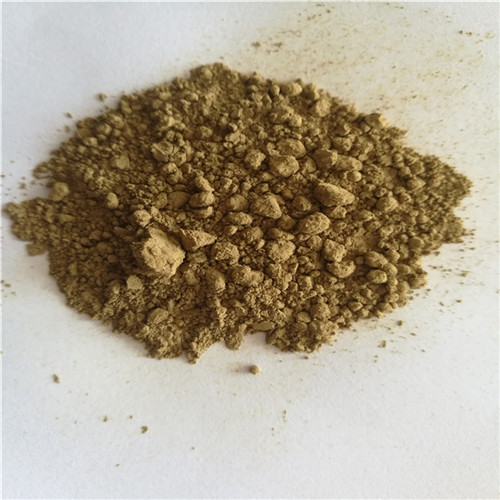
It is an inorganic compound composed of nitrogen and magnesium and belongs to the cubic crystal system. Pure magnesium nitride is yellow-green powder at room temperature, but magnesium nitride containing a part of magnesium oxide impurities is off-white. Magnesium nitride, like many metal nitrides, reacts with water to produce ammonia. To prepare magnesium nitride, the magnesium belt can be burned in nitrogen,often used as a catalyst.
Physical properties: Magnesium nitride (Mg3N2) is an inorganic compound composed of nitrogen and magnesium, a cubic crystal system. It is yellow-green powder under pure magnesium nitride at room temperature, but magnesium nitride containing a part of magnesium oxide impurities is off-white. It is soluble in acid, slightly soluble in ethanol and ether.
Chemical properties: Magnesium nitride, like many metal nitrides, will react with water to produce ammonia and can also react with acids or water-containing non-metal oxides to produce ammonium and magnesium salts.
Because magnesium nitride is easy to combine and decompose with water (H2O), it needs to be stored in a vacuum-sealed, waterproof and moisture-proof.
Slightly harmful to water bodies, do not expose undiluted or large amounts of products to groundwater, waterways or sewage systems, and do not discharge materials into the surrounding environment without government permission.
Magnesium nitride reacts with water to produce magnesium hydroxide and ammonia gas, as do many metal nitrides.
Mg3N2(s) + 6 H2O(l) → 3 Mg(OH)2(aq) + 2 NH3(g)
In fact, when magnesium is combustion in air, in addition to the main product, magnesium hydroxide, magnesium nitride will form some.
The thermal decomposition of magnesium nitride produces magnesium and nitrogen (700-1500 °C).
Under high pressure, the new nitrogen-rich nitride (N / Mg ratio is equal to or greater than 1) the stability of the formed and was later found to be presented. These include Mg2N4 and MgN4 solids, both of which become thermodynamically stable around 50 GPa. Mg2N4 is composed of a strange cis-tetrazole N44− species with an N-N bond level close to 1. This unit N44- Mg2N4 compound is recovered together with the ambient conditions, marking only the fourth multi-entity nitrogen stable under ambient conditions.
 What is magnesium nitride used for?
1. It is used as a catalyst when preparing nitrides of other elements with high hardness, high thermal conductivity, corrosion resistance, wear-resistance and high-temperature resistance. When the cubic boron nitride was successfully synthesized for the first time, the catalyst used was magnesium nitride;
2. Additives used in high-strength steel smelting. Magnesium nitride (Mg3N2) replaces desulfurized magnesium in the smelting of construction steel, which is beneficial to improve the density, strength, tensile strength and endurance of steel. In addition, the use of magnesium nitride (Mg3N2) for desulfurization can reduce other additives in an appropriate amount, thereby helping to reduce the production cost of construction steel;
3. Preparation of special ceramic materials;
4. Foaming agent for manufacturing special alloys;
5. Used to manufacture special glass;
6. Catalytic polymer cross-linking;
7. Recycling of nuclear waste;
8. Used as a catalyst material for synthetic diamond synthesis and cubic boron nitride.
The use of Mg3N2 as an additive:
Because magnesium nitride is easily combined with water (H2O) to decompose (Mg3N2 + 6H2O = 3Mg(OH)2 ↓+ 2NH3↑), it is stored in a vacuum tightly sealed state being waterproof and moisture-proof.
About the preparation method of magnesium nitride
To prepare magnesium nitride, the magnesium belt can be burned in nitrogen.
In the above reaction, if the nitrogen is not pure, it is easy to produce products containing magnesium oxide. The method of reaction in dry NH3 gas is better.
Place the magnesium scraps in a porcelain boat or a sintered magnesia boat. The boat is installed in a porcelain tube. One end of the porcelain tube is connected to a T-shaped tube. The end of the porcelain tube is connected to a U-shaped tube, and the tube is filled with desiccant, half of which is small flakes of CaO, and the other half is small flakes of KOH. The gas discharged from the reaction tube is absorbed by the absorption device, which is two conical flasks containing dilute sulfuric acid. To prevent back suction, do not insert the tube of the first absorption bottle below the surface of the dilute sulfuric acid.
Pour dry NH3 and N2 into the porcelain tube until the second absorption bottle no longer emits bubbles, indicating that the air in the porcelain tube has been purged. Raise the temperature to 800~850℃, heat the magnesium powder for 4 hours, the magnesium powder becomes hot, marking the beginning of the reaction, and at the same time H2 must be produced. During the reaction, the pressure of NH3 should be greater than the outside atmospheric pressure to avoid sucking back. When the reaction is over, turn off NH3, keep the original temperature and continue to pass N21.5h to remove NH3·Mg3N2 adsorbed on Mg3N2, which is very deliquescent and must be stored in a dry container.
If the magnesium belt is burned in the air, in addition to magnesium oxide, some magnesium nitride will also be produced.
Mg3N2+6H2O=3Mg(OH)2+2NH3. What happens when nitrogen reacts with magnesium? Write and balance: solid magnesium reacts with nitrogen gas to form solid magnesium nitride. Solid magnesium reacts with oxygen gas to form solid magnesium oxide.
Experiments research about magnesium nitride
The determination of the composition of magnesium oxide by heating a magnesium belt is a popular chemical experiment in high school and first-year college. A known amount of magnesium strip is heated on a gas flame in a partially covered crucible. Mg reacts with O2 in the air, leaving a white MgO residue. The partially opened lid of the crucible slows down the burning rate of Mg and reduces the loss of MgO as flue gas. Knowing the mass of Mg and MgO can determine the stoichiometry of the reaction.
In the literature, it is generally asserted that MgO formed by the combustion of magnesium in the air may be contaminated by Mg3N2. Given that the combustion temperature of Mg is much higher than the aforementioned 850oC, this is not unreasonable. Although Mg3N2 burns in O2 to form MgO, the rapid cooling of the ashes may retain any existing nitrides.
Magnesium nitride Supplier
TRUNNANO (aka. Luoyang Tongrun Nano Technology Co. Ltd.) is a trusted global chemical material supplier & manufacturer with over 12 years' experience in providing super high-quality chemicals and Nanomaterials. Currently, our company has successfully developed a series of materials. The magnesium nitride produced by our company has high purity, fine particle size and impurity content. For the latest price of magnesium nitride, send us an email or click on the needed products to send an inquiry.
Magnesium nitride has a molecular formula of Mg3N2 and a molecular weight of 100.9494.
It is an inorganic compound composed of nitrogen and magnesium and belongs to the cubic crystal system. Pure magnesium nitride is yellow-green powder at room temperature, but magnesium nitride containing a part of magnesium oxide impurities is off-white. Magnesium nitride, like many metal nitrides, reacts with water to produce ammonia. To prepare magnesium nitride, the magnesium belt can be burned in nitrogen,often used as a catalyst.
Physical properties: Magnesium nitride (Mg3N2) is an inorganic compound composed of nitrogen and magnesium, a cubic crystal system. It is yellow-green powder under pure magnesium nitride at room temperature, but magnesium nitride containing a part of magnesium oxide impurities is off-white. It is soluble in acid, slightly soluble in ethanol and ether.
Chemical properties: Magnesium nitride, like many metal nitrides, will react with water to produce ammonia and can also react with acids or water-containing non-metal oxides to produce ammonium and magnesium salts.
Because magnesium nitride is easy to combine and decompose with water (H2O), it needs to be stored in a vacuum-sealed, waterproof and moisture-proof.
Slightly harmful to water bodies, do not expose undiluted or large amounts of products to groundwater, waterways or sewage systems, and do not discharge materials into the surrounding environment without government permission.
Magnesium nitride reacts with water to produce magnesium hydroxide and ammonia gas, as do many metal nitrides.
Mg3N2(s) + 6 H2O(l) → 3 Mg(OH)2(aq) + 2 NH3(g)
In fact, when magnesium is combustion in air, in addition to the main product, magnesium hydroxide, magnesium nitride will form some.
The thermal decomposition of magnesium nitride produces magnesium and nitrogen (700-1500 °C).
Under high pressure, the new nitrogen-rich nitride (N / Mg ratio is equal to or greater than 1) the stability of the formed and was later found to be presented. These include Mg2N4 and MgN4 solids, both of which become thermodynamically stable around 50 GPa. Mg2N4 is composed of a strange cis-tetrazole N44− species with an N-N bond level close to 1. This unit N44- Mg2N4 compound is recovered together with the ambient conditions, marking only the fourth multi-entity nitrogen stable under ambient conditions.
1. It is used as a catalyst when preparing nitrides of other elements with high hardness, high thermal conductivity, corrosion resistance, wear-resistance and high-temperature resistance. When the cubic boron nitride was successfully synthesized for the first time, the catalyst used was magnesium nitride;
2. Additives used in high-strength steel smelting. Magnesium nitride (Mg3N2) replaces desulfurized magnesium in the smelting of construction steel, which is beneficial to improve the density, strength, tensile strength and endurance of steel. In addition, the use of magnesium nitride (Mg3N2) for desulfurization can reduce other additives in an appropriate amount, thereby helping to reduce the production cost of construction steel;
3. Preparation of special ceramic materials;
4. Foaming agent for manufacturing special alloys;
5. Used to manufacture special glass;
6. Catalytic polymer cross-linking;
7. Recycling of nuclear waste;
8. Used as a catalyst material for synthetic diamond synthesis and cubic boron nitride.
The use of Mg3N2 as an additive:
- Magnesium nitride (Mg3N2) replaces the desulfurized magnesium in the smelting of construction steel, which is beneficial to increase the density, strength, tensile strength and endurance of the steel, increase the content of "Vitriol" (Vitriol) in the material, and reach the high quality proposed by the Chinese government with the standard of construction steel.
Because magnesium nitride is easily combined with water (H2O) to decompose (Mg3N2 + 6H2O = 3Mg(OH)2 ↓+ 2NH3↑), it is stored in a vacuum tightly sealed state being waterproof and moisture-proof.
About the preparation method of magnesium nitride
To prepare magnesium nitride, the magnesium belt can be burned in nitrogen.
In the above reaction, if the nitrogen is not pure, it is easy to produce products containing magnesium oxide. The method of reaction in dry NH3 gas is better.
Place the magnesium scraps in a porcelain boat or a sintered magnesia boat. The boat is installed in a porcelain tube. One end of the porcelain tube is connected to a T-shaped tube. The end of the porcelain tube is connected to a U-shaped tube, and the tube is filled with desiccant, half of which is small flakes of CaO, and the other half is small flakes of KOH. The gas discharged from the reaction tube is absorbed by the absorption device, which is two conical flasks containing dilute sulfuric acid. To prevent back suction, do not insert the tube of the first absorption bottle below the surface of the dilute sulfuric acid.
Pour dry NH3 and N2 into the porcelain tube until the second absorption bottle no longer emits bubbles, indicating that the air in the porcelain tube has been purged. Raise the temperature to 800~850℃, heat the magnesium powder for 4 hours, the magnesium powder becomes hot, marking the beginning of the reaction, and at the same time H2 must be produced. During the reaction, the pressure of NH3 should be greater than the outside atmospheric pressure to avoid sucking back. When the reaction is over, turn off NH3, keep the original temperature and continue to pass N21.5h to remove NH3·Mg3N2 adsorbed on Mg3N2, which is very deliquescent and must be stored in a dry container.
If the magnesium belt is burned in the air, in addition to magnesium oxide, some magnesium nitride will also be produced.
Mg3N2+6H2O=3Mg(OH)2+2NH3. What happens when nitrogen reacts with magnesium? Write and balance: solid magnesium reacts with nitrogen gas to form solid magnesium nitride. Solid magnesium reacts with oxygen gas to form solid magnesium oxide.
Experiments research about magnesium nitride
The determination of the composition of magnesium oxide by heating a magnesium belt is a popular chemical experiment in high school and first-year college. A known amount of magnesium strip is heated on a gas flame in a partially covered crucible. Mg reacts with O2 in the air, leaving a white MgO residue. The partially opened lid of the crucible slows down the burning rate of Mg and reduces the loss of MgO as flue gas. Knowing the mass of Mg and MgO can determine the stoichiometry of the reaction.
In the literature, it is generally asserted that MgO formed by the combustion of magnesium in the air may be contaminated by Mg3N2. Given that the combustion temperature of Mg is much higher than the aforementioned 850oC, this is not unreasonable. Although Mg3N2 burns in O2 to form MgO, the rapid cooling of the ashes may retain any existing nitrides.
Magnesium nitride Supplier
TRUNNANO (aka. Luoyang Tongrun Nano Technology Co. Ltd.) is a trusted global chemical material supplier & manufacturer with over 12 years' experience in providing super high-quality chemicals and Nanomaterials. Currently, our company has successfully developed a series of materials. The magnesium nitride produced by our company has high purity, fine particle size and impurity content. For the latest price of magnesium nitride, send us an email or click on the needed products to send an inquiry.
Leave a Reply
Your email address will not be published.Required fields are marked. *