
By lql | 12 February 2023 | 0 Comments
How is colloidal gold made?
What is Colloidal gold?
Colloidal solution refers to a solution formed by dispersing solid particles of drugs or polymer compounds of a certain size in a solvent. The particles of its dispersion system are generally between 1 and 100 nanometers, most of the dispersion media are water, and a few are non-aqueous solvents. Nanogold is made by using high-purity gold as raw material, through a special new processing technology to make gold particle size of 15nm or less, greatly improving the inherent characteristics of gold, such as catalytic effect, free radical removal effect, dispersion effect, and so on.
Colloidal solution refers to a solution formed by dispersing solid particles of drugs or polymer compounds of a certain size in a solvent. The particles of its dispersion system are generally between 1 and 100 nanometers, most of the dispersion media are water, and a few are non-aqueous solvents. Nanogold is made by using high-purity gold as raw material, through a special new processing technology to make gold particle size of 15nm or less, greatly improving the inherent characteristics of gold, such as catalytic effect, free radical removal effect, dispersion effect, and so on.
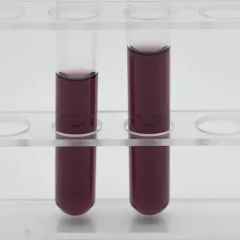
preparation method of Colloidal gold
Preparation of hydrophilic colloid
The preparation of hydrophilic sol first goes through the swelling process. Swelling refers to the process that water molecules penetrate into the gaps of hydrophilic sol compounds and hydrate with hydrophilic groups to expand the volume so that the gaps of polymers are filled with water molecules. This process is called limited swelling.
Due to the existence of water molecules in the gaps, the intermolecular force is reduced, and the swelling process continues. Finally, the compound is completely dispersed in water to form hydrophilic sol, which is called infinite swelling.
Preparation of Hydrophobic Colloid (Sol)
1. Dispersion method
Dispersion law is the process of dispersing coarse particles of drugs into a sol particle size range.
(1) mechanical dispersion method: colloid mill is often used for preparation.
(2) peptization: a method of redispersing aggregated coarse particles into sol particles.
(3) Ultrasonic dispersion method: the coarse particles are dispersed into the soil by using the energy generated by ultrasonic waves above 20kHz.
2. Coagulation method
(1) Physical coagulation method: by changing the dispersion medium, the dissolved drugs are precipitated into microcrystals in poor solvents to prepare sol.
(2) Chemical coagulation method: Sol is prepared by chemical reactions such as oxidation, reduction, hydrolysis, and double decomposition.
Price of Colloidal gold
Colloidal gold particle size and purity will affect the product's price, and the purchase volume can also affect the cost of Colloidal gold. A large amount of large amount will be lower. The price of Colloidal gold can be found on our company's official website.
Colloidal gold supplier
Luoyang Tongrun Nano Technology Co. Ltd. (TRUNNANO) Luoyang City, Henan Province, China, is a reliable and high-quality global chemical material supplier and manufacturer. It has more than 12 years of experience providing ultra-high quality chemicals and nanotechnology materials, including Colloidal gold, nitride powder, Colloidal gold, sulfide powder, and 3D printing powder. If you are looking for high-quality and cost-effective Colloidal gold, you are welcome to contact us or inquire any time.
Preparation of hydrophilic colloid
The preparation of hydrophilic sol first goes through the swelling process. Swelling refers to the process that water molecules penetrate into the gaps of hydrophilic sol compounds and hydrate with hydrophilic groups to expand the volume so that the gaps of polymers are filled with water molecules. This process is called limited swelling.
Due to the existence of water molecules in the gaps, the intermolecular force is reduced, and the swelling process continues. Finally, the compound is completely dispersed in water to form hydrophilic sol, which is called infinite swelling.
Preparation of Hydrophobic Colloid (Sol)
1. Dispersion method
Dispersion law is the process of dispersing coarse particles of drugs into a sol particle size range.
(1) mechanical dispersion method: colloid mill is often used for preparation.
(2) peptization: a method of redispersing aggregated coarse particles into sol particles.
(3) Ultrasonic dispersion method: the coarse particles are dispersed into the soil by using the energy generated by ultrasonic waves above 20kHz.
2. Coagulation method
(1) Physical coagulation method: by changing the dispersion medium, the dissolved drugs are precipitated into microcrystals in poor solvents to prepare sol.
(2) Chemical coagulation method: Sol is prepared by chemical reactions such as oxidation, reduction, hydrolysis, and double decomposition.
Price of Colloidal gold
Colloidal gold particle size and purity will affect the product's price, and the purchase volume can also affect the cost of Colloidal gold. A large amount of large amount will be lower. The price of Colloidal gold can be found on our company's official website.
Colloidal gold supplier
Luoyang Tongrun Nano Technology Co. Ltd. (TRUNNANO) Luoyang City, Henan Province, China, is a reliable and high-quality global chemical material supplier and manufacturer. It has more than 12 years of experience providing ultra-high quality chemicals and nanotechnology materials, including Colloidal gold, nitride powder, Colloidal gold, sulfide powder, and 3D printing powder. If you are looking for high-quality and cost-effective Colloidal gold, you are welcome to contact us or inquire any time.
Leave a Reply
Your email address will not be published.Required fields are marked. *