
By Vincy | 01 April 2026 | 0 Comments
Bridging the Interface: A Comparative Analysis of KH550 and KH570 Modified Spherical Alumina
The optimization of thermal interface materials relies heavily on the precise engineering of filler surfaces, a domain where the distinction between KH550 modified spherical alumina and KH570 modified spherical alumina becomes the deciding factor in composite performance. As the electronics industry pushes towards higher power densities and miniaturization, the demand for spherical aluminum oxide (Al2O3) as a thermally conductive filler has skyrocketed. However, raw spherical alumina is inherently hydrophilic and incompatible with the hydrophobic organic polymers—such as epoxies, silicones, and polyimides—that serve as the matrix in these composites. To bridge this gap, surface modification using silane coupling agents is essential. Among these, KH550 and KH570 stand out as the two dominant chemistries, each offering distinct advantages based on their functional groups, reaction mechanisms, and compatibility with different resin systems.
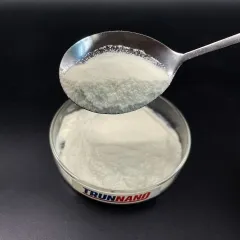
KH550 Modified Spherical Alumina
The Imperative of Surface Modification
To understand why we modify spherical alumina, one must first look at the physics of the interface. Spherical alumina is prized for its high thermal conductivity and low abrasion. However, in its natural state, the surface of the alumina particle is covered with hydroxyl groups (-OH), making it highly polar and hydrophilic. When mixed with organic resins, which are typically non-polar, these particles tend to agglomerate to minimize their surface energy. This agglomeration creates voids, increases viscosity, and drastically reduces thermal conductivity because heat must travel through the insulating polymer rather than the conductive filler network.
Surface modification acts as a molecular bridge. Silane coupling agents generally follow the structure R-Si-(OR')3. The alkoxy groups (OR') hydrolyze to form silanols, which bond with the inorganic filler surface. The organic functional group (R) then interacts with the polymer matrix. By choosing between an amino-functional silane like KH550 and a methacryloxy-functional silane like KH570, material scientists effectively choose how the filler will communicate with the matrix.
The Chemistry of KH550: The Amino Connection
KH550, chemically known as γ-Aminopropyltriethoxysilane, is a versatile coupling agent characterized by its primary amine group (-NH2). When used to create KH550 modified spherical alumina, the amino group provides a unique set of interaction capabilities. The amine functionality is strongly basic and nucleophilic, allowing it to react readily with a variety of organic polymers.
The primary mechanism of KH550 is its ability to form hydrogen bonds and covalent bonds with polar resins. It is particularly effective in epoxy systems, where the amine group can participate in the curing reaction, effectively becoming part of the cross-linked network. Furthermore, the amino group is compatible with polyurethanes, phenolic resins, and nylons. The presence of the amine group also imparts a certain degree of hydrophilicity to the surface, which, while generally undesirable for moisture resistance, can be beneficial for wetting out specific polar substrates or for applications requiring high surface energy, such as adhesion promotion in coatings.
In the context of spherical alumina, KH550 acts as a "wetting agent" that reduces the surface tension between the inorganic particle and the organic matrix. It helps to disperse the particles more uniformly, preventing the "clumping" that leads to thermal resistance. However, because the amino group is polar, KH550 modified spherical alumina may still retain some affinity for moisture if not properly processed, which can be a consideration for high-reliability electronics.
The Chemistry of KH570: The Methacrylate Advantage
In contrast, KH570, or γ-Methacryloxypropyltrimethoxysilane, introduces a completely different chemical personality to the surface of the alumina. KH570 contains a methacrylate functional group, which includes a carbon-carbon double bond (C=C). This structural difference is the key to the performance of KH570 modified spherical alumina.
The methacrylate group is non-polar and hydrophobic. When grafted onto spherical alumina, it transforms the surface from hydrophilic to hydrophobic. This is a critical distinction. By capping the surface hydroxyl groups with long organic chains, KH570 significantly reduces the surface energy of the filler. This results in a material that repels water and interacts very favorably with non-polar or weakly polar polymers.
Viscosity and Rheology: The Flow Dynamics
One of the most practical differences between these two modified fillers is observed in the rheology of the composite mixture. Viscosity—the resistance of a fluid to flow—is a critical parameter in the manufacturing of thermal interface materials, potting compounds, and encapsulants.
KH570 modified spherical alumina generally exhibits lower viscosity in organic systems compared to its KH550 counterpart. This is due to the "lubricating" effect of the hydrophobic methacrylate chains. Because the surface of the KH570-treated particle is less polar, there is less inter-particle friction and less interaction with the solvent or resin matrix that would otherwise thicken the mixture. The particles slide past one another more easily, much like ball bearings coated in a slick, organic layer. This allows manufacturers to achieve higher filler loadings—often exceeding 90% by weight—without the mixture becoming an unmanageable paste. High filler loading is directly correlated with high thermal conductivity, making KH570 the preferred choice for high-performance thermal greases and gap fillers where flow is essential.
Conversely, KH550 modified spherical alumina can sometimes result in higher viscosity mixtures, particularly in non-polar matrices. The polar amine groups can interact with each other or with the resin in a way that increases internal friction. While this can be advantageous for thixotropic applications (where the material needs to stay in place after dispensing), it can be a limitation for applications requiring high flow, such as underfills or injection molding compounds.
Hydrophobicity and Moisture Resistance
In the harsh environments of automotive electronics or outdoor telecommunications gear, moisture is the enemy. Water ingress can lead to corrosion, dielectric breakdown, and delamination. Here, the hydrophobic nature of KH570 modified spherical alumina offers a distinct advantage.
The methacrylate group of KH570 creates a steric barrier around the alumina particle. This organic shell prevents water molecules from reaching the alumina surface. Consequently, composites filled with KH570-treated alumina tend to have lower water absorption rates and better dielectric stability under humid conditions. This is crucial for maintaining the long-term reliability of high-voltage insulation.
KH550, with its hydrophilic amine group, does not offer the same level of moisture protection. While it improves compatibility over raw alumina, the amino group can still attract water molecules. In applications where moisture resistance is paramount, KH550 might require secondary treatments or the use of specific hydrophobic resins to mitigate this effect.
Compatibility with Resin Systems
The choice between KH550 and KH570 is often dictated by the chemistry of the matrix resin. This is the concept of "like dissolves like" applied to composite engineering.
Epoxy Systems:
Epoxy resins are polar and typically cured with amine or anhydride hardeners. KH550 is the classic choice for epoxy systems. The amine group of KH550 is chemically similar to the hardener and can even participate in the epoxy ring-opening reaction. This creates a robust chemical bond between the spherical alumina and the epoxy network, ensuring excellent mechanical strength and thermal transfer. While KH570 can be used in epoxies, KH550 generally provides better interfacial adhesion in this specific chemical environment.
Acrylic and Unsaturated Polyester Systems:
For resins that cure via free-radical mechanisms, such as acrylics and unsaturated polyesters, KH570 is superior. The methacrylate group on the silane is structurally identical to the backbone of these resins. When the resin cures, the KH570 on the alumina surface copolymerizes with the resin, effectively turning the ceramic particle into a cross-linking node. This level of integration is impossible to achieve with KH550 in these systems.
Silicone Systems:
Silicones are generally non-polar and hydrophobic. While both silanes can be used, KH570 is often preferred for high-performance silicone thermal greases because its hydrophobicity matches the silicone oil base, ensuring better dispersion and stability over time. 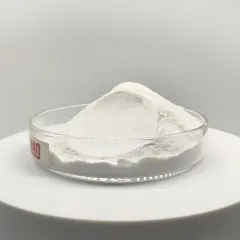
KH550 Modified Spherical Alumina
Thermal Conductivity Implications
Ultimately, the goal of using spherical alumina is to conduct heat. The efficiency of this heat transfer depends on the "phonon transport" across the interface between the particle and the resin.
KH570 modified spherical alumina often yields higher thermal conductivity in high-loading composites. This is not necessarily because the KH570 molecule itself conducts heat better, but because it allows for higher packing densities. As mentioned earlier, the lower viscosity allows more particles to be packed into the same volume. A denser network of alumina spheres creates more continuous pathways for heat to travel, reducing the thermal resistance of the composite.
Furthermore, the hydrophobic layer of KH570 minimizes the formation of micro-voids caused by moisture or poor wetting. Voids are thermal insulators. By ensuring a tight, void-free interface between the filler and the matrix, KH570 maximizes the intrinsic thermal conductivity of the alumina.
KH550, while excellent for adhesion, may result in slightly lower thermal conductivity in some high-loading scenarios due to the higher viscosity limiting the maximum packing fraction. However, in systems where the interface bonding is the limiting factor for heat transfer, the strong chemical bond provided by KH550 can ensure efficient phonon coupling.
Mechanical Properties and Durability
The mechanical integrity of a composite is also influenced by the choice of modifier. KH550 modified spherical alumina tends to improve the tensile strength and flexural modulus of composites, particularly in brittle matrices like epoxy. The strong chemical linkage transfers stress from the soft polymer to the hard ceramic particle effectively. This makes KH550 ideal for structural encapsulants where the material must protect the component from physical shock.
KH570, on the other hand, can improve the toughness and impact resistance of the composite. The long organic chain of the methacrylate group can act as a flexible spacer, absorbing energy and preventing crack propagation. In applications requiring flexibility, such as thermal gap pads that must compress without cracking, KH570 treated fillers are often the better choice.
Processing and Application Scenarios
When selecting between these two materials, the application scenario is the final arbiter.
For underfill applications in semiconductor packaging, where a low-viscosity epoxy must flow into microscopic gaps beneath a chip, KH550 modified spherical alumina is often used. The small particle size combined with the amine compatibility ensures the material flows well in the specific epoxy formulation used for underfills and bonds strongly to the chip and substrate.
For thermal greases and gap fillers used in consumer electronics (like CPUs and GPUs), KH570 modified spherical alumina is the industry standard. The requirement here is maximum thermal conductivity and pump-out resistance. The hydrophobic nature of KH570 prevents the grease from drying out or absorbing moisture, and the low viscosity allows for the high filler loading needed to achieve thermal conductivities of 3 W/mK to 6 W/mK.
In coatings and paints, KH570 is preferred for its ability to disperse in organic solvents and its reactivity with acrylic binders, providing scratch resistance and thermal stability without affecting the clarity or gloss of the coating. 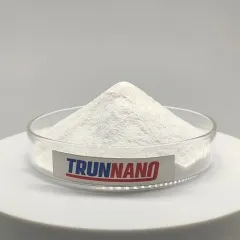
KH570 Modified Spherical Alumina
TRUNNANO CEO Roger Luo said:" The development of advanced thermal materials is increasingly focusing on optimizing the interfacial compatibility of spherical alumina with diverse polymer matrices through precise silane functionalization.”
Supplier
TRUNNANO is a globally recognized KH550 Modified Spherical Alumina manufacturer , KH570 Modified Spherical Alumina and supplier of compounds with more than 12 years of expertise in the highest quality nanomaterials and other chemicals. The company develops a variety of powder materials and chemicals. Provide OEM service. If you need high quality KH550 Modified Spherical Alumina, please feel free to contact us. You can click on the product to contact us.
Tags: KH550 Modified Spherical Alumina, KH570 Modified Spherical Alumina, Spherical Alumina
KH550 Modified Spherical Alumina
The Imperative of Surface Modification
To understand why we modify spherical alumina, one must first look at the physics of the interface. Spherical alumina is prized for its high thermal conductivity and low abrasion. However, in its natural state, the surface of the alumina particle is covered with hydroxyl groups (-OH), making it highly polar and hydrophilic. When mixed with organic resins, which are typically non-polar, these particles tend to agglomerate to minimize their surface energy. This agglomeration creates voids, increases viscosity, and drastically reduces thermal conductivity because heat must travel through the insulating polymer rather than the conductive filler network.
Surface modification acts as a molecular bridge. Silane coupling agents generally follow the structure R-Si-(OR')3. The alkoxy groups (OR') hydrolyze to form silanols, which bond with the inorganic filler surface. The organic functional group (R) then interacts with the polymer matrix. By choosing between an amino-functional silane like KH550 and a methacryloxy-functional silane like KH570, material scientists effectively choose how the filler will communicate with the matrix.
The Chemistry of KH550: The Amino Connection
KH550, chemically known as γ-Aminopropyltriethoxysilane, is a versatile coupling agent characterized by its primary amine group (-NH2). When used to create KH550 modified spherical alumina, the amino group provides a unique set of interaction capabilities. The amine functionality is strongly basic and nucleophilic, allowing it to react readily with a variety of organic polymers.
The primary mechanism of KH550 is its ability to form hydrogen bonds and covalent bonds with polar resins. It is particularly effective in epoxy systems, where the amine group can participate in the curing reaction, effectively becoming part of the cross-linked network. Furthermore, the amino group is compatible with polyurethanes, phenolic resins, and nylons. The presence of the amine group also imparts a certain degree of hydrophilicity to the surface, which, while generally undesirable for moisture resistance, can be beneficial for wetting out specific polar substrates or for applications requiring high surface energy, such as adhesion promotion in coatings.
In the context of spherical alumina, KH550 acts as a "wetting agent" that reduces the surface tension between the inorganic particle and the organic matrix. It helps to disperse the particles more uniformly, preventing the "clumping" that leads to thermal resistance. However, because the amino group is polar, KH550 modified spherical alumina may still retain some affinity for moisture if not properly processed, which can be a consideration for high-reliability electronics.
The Chemistry of KH570: The Methacrylate Advantage
In contrast, KH570, or γ-Methacryloxypropyltrimethoxysilane, introduces a completely different chemical personality to the surface of the alumina. KH570 contains a methacrylate functional group, which includes a carbon-carbon double bond (C=C). This structural difference is the key to the performance of KH570 modified spherical alumina.
The methacrylate group is non-polar and hydrophobic. When grafted onto spherical alumina, it transforms the surface from hydrophilic to hydrophobic. This is a critical distinction. By capping the surface hydroxyl groups with long organic chains, KH570 significantly reduces the surface energy of the filler. This results in a material that repels water and interacts very favorably with non-polar or weakly polar polymers.
Moreover, the C=C double bond in KH570 allows it to participate in free-radical polymerization. This makes it uniquely suited for unsaturated polyester resins, acrylics, and other vinyl-based systems. Unlike KH550, which relies on condensation or addition reactions typical of amines, KH570 can copolymerize directly with the resin backbone during curing. This "reactive compatibility" ensures that the filler is chemically locked into the matrix, providing superior mechanical stability and resistance to leaching or phase separation. 
KH570 Modified Spherical Alumina
Viscosity and Rheology: The Flow Dynamics
One of the most practical differences between these two modified fillers is observed in the rheology of the composite mixture. Viscosity—the resistance of a fluid to flow—is a critical parameter in the manufacturing of thermal interface materials, potting compounds, and encapsulants.
KH570 modified spherical alumina generally exhibits lower viscosity in organic systems compared to its KH550 counterpart. This is due to the "lubricating" effect of the hydrophobic methacrylate chains. Because the surface of the KH570-treated particle is less polar, there is less inter-particle friction and less interaction with the solvent or resin matrix that would otherwise thicken the mixture. The particles slide past one another more easily, much like ball bearings coated in a slick, organic layer. This allows manufacturers to achieve higher filler loadings—often exceeding 90% by weight—without the mixture becoming an unmanageable paste. High filler loading is directly correlated with high thermal conductivity, making KH570 the preferred choice for high-performance thermal greases and gap fillers where flow is essential.
Conversely, KH550 modified spherical alumina can sometimes result in higher viscosity mixtures, particularly in non-polar matrices. The polar amine groups can interact with each other or with the resin in a way that increases internal friction. While this can be advantageous for thixotropic applications (where the material needs to stay in place after dispensing), it can be a limitation for applications requiring high flow, such as underfills or injection molding compounds.
Hydrophobicity and Moisture Resistance
In the harsh environments of automotive electronics or outdoor telecommunications gear, moisture is the enemy. Water ingress can lead to corrosion, dielectric breakdown, and delamination. Here, the hydrophobic nature of KH570 modified spherical alumina offers a distinct advantage.
The methacrylate group of KH570 creates a steric barrier around the alumina particle. This organic shell prevents water molecules from reaching the alumina surface. Consequently, composites filled with KH570-treated alumina tend to have lower water absorption rates and better dielectric stability under humid conditions. This is crucial for maintaining the long-term reliability of high-voltage insulation.
KH550, with its hydrophilic amine group, does not offer the same level of moisture protection. While it improves compatibility over raw alumina, the amino group can still attract water molecules. In applications where moisture resistance is paramount, KH550 might require secondary treatments or the use of specific hydrophobic resins to mitigate this effect.
Compatibility with Resin Systems
The choice between KH550 and KH570 is often dictated by the chemistry of the matrix resin. This is the concept of "like dissolves like" applied to composite engineering.
Epoxy Systems:
Epoxy resins are polar and typically cured with amine or anhydride hardeners. KH550 is the classic choice for epoxy systems. The amine group of KH550 is chemically similar to the hardener and can even participate in the epoxy ring-opening reaction. This creates a robust chemical bond between the spherical alumina and the epoxy network, ensuring excellent mechanical strength and thermal transfer. While KH570 can be used in epoxies, KH550 generally provides better interfacial adhesion in this specific chemical environment.
Acrylic and Unsaturated Polyester Systems:
For resins that cure via free-radical mechanisms, such as acrylics and unsaturated polyesters, KH570 is superior. The methacrylate group on the silane is structurally identical to the backbone of these resins. When the resin cures, the KH570 on the alumina surface copolymerizes with the resin, effectively turning the ceramic particle into a cross-linking node. This level of integration is impossible to achieve with KH550 in these systems.
Silicone Systems:
Silicones are generally non-polar and hydrophobic. While both silanes can be used, KH570 is often preferred for high-performance silicone thermal greases because its hydrophobicity matches the silicone oil base, ensuring better dispersion and stability over time.
KH550 Modified Spherical Alumina
Thermal Conductivity Implications
Ultimately, the goal of using spherical alumina is to conduct heat. The efficiency of this heat transfer depends on the "phonon transport" across the interface between the particle and the resin.
KH570 modified spherical alumina often yields higher thermal conductivity in high-loading composites. This is not necessarily because the KH570 molecule itself conducts heat better, but because it allows for higher packing densities. As mentioned earlier, the lower viscosity allows more particles to be packed into the same volume. A denser network of alumina spheres creates more continuous pathways for heat to travel, reducing the thermal resistance of the composite.
Furthermore, the hydrophobic layer of KH570 minimizes the formation of micro-voids caused by moisture or poor wetting. Voids are thermal insulators. By ensuring a tight, void-free interface between the filler and the matrix, KH570 maximizes the intrinsic thermal conductivity of the alumina.
KH550, while excellent for adhesion, may result in slightly lower thermal conductivity in some high-loading scenarios due to the higher viscosity limiting the maximum packing fraction. However, in systems where the interface bonding is the limiting factor for heat transfer, the strong chemical bond provided by KH550 can ensure efficient phonon coupling.
Mechanical Properties and Durability
The mechanical integrity of a composite is also influenced by the choice of modifier. KH550 modified spherical alumina tends to improve the tensile strength and flexural modulus of composites, particularly in brittle matrices like epoxy. The strong chemical linkage transfers stress from the soft polymer to the hard ceramic particle effectively. This makes KH550 ideal for structural encapsulants where the material must protect the component from physical shock.
KH570, on the other hand, can improve the toughness and impact resistance of the composite. The long organic chain of the methacrylate group can act as a flexible spacer, absorbing energy and preventing crack propagation. In applications requiring flexibility, such as thermal gap pads that must compress without cracking, KH570 treated fillers are often the better choice.
Processing and Application Scenarios
When selecting between these two materials, the application scenario is the final arbiter.
For underfill applications in semiconductor packaging, where a low-viscosity epoxy must flow into microscopic gaps beneath a chip, KH550 modified spherical alumina is often used. The small particle size combined with the amine compatibility ensures the material flows well in the specific epoxy formulation used for underfills and bonds strongly to the chip and substrate.
For thermal greases and gap fillers used in consumer electronics (like CPUs and GPUs), KH570 modified spherical alumina is the industry standard. The requirement here is maximum thermal conductivity and pump-out resistance. The hydrophobic nature of KH570 prevents the grease from drying out or absorbing moisture, and the low viscosity allows for the high filler loading needed to achieve thermal conductivities of 3 W/mK to 6 W/mK.
In coatings and paints, KH570 is preferred for its ability to disperse in organic solvents and its reactivity with acrylic binders, providing scratch resistance and thermal stability without affecting the clarity or gloss of the coating.
KH570 Modified Spherical Alumina
TRUNNANO CEO Roger Luo said:" The development of advanced thermal materials is increasingly focusing on optimizing the interfacial compatibility of spherical alumina with diverse polymer matrices through precise silane functionalization.”
Supplier
TRUNNANO is a globally recognized KH550 Modified Spherical Alumina manufacturer , KH570 Modified Spherical Alumina and supplier of compounds with more than 12 years of expertise in the highest quality nanomaterials and other chemicals. The company develops a variety of powder materials and chemicals. Provide OEM service. If you need high quality KH550 Modified Spherical Alumina, please feel free to contact us. You can click on the product to contact us.
Tags: KH550 Modified Spherical Alumina, KH570 Modified Spherical Alumina, Spherical Alumina
Leave a Reply
Your email address will not be published.Required fields are marked. *