
By Dr.Qian from Guizhou University of Finance and Eco | 16 July 2020 | 0 Comments
Molybdenum disulfide nano-electromechanical system: ultra-thin, ultra-small!
What is molybdenum disulfide?
Molybdenum disulfide is the main component of molybdenite. It is usually presented in the form of black solid powder with metallic luster. Its chemical formula is MoS2, and its melting point is 1185 ℃,its density is 4.80 g/cm3 (14 ℃), and its mohs hardness is 1.0 ~ 1.5. 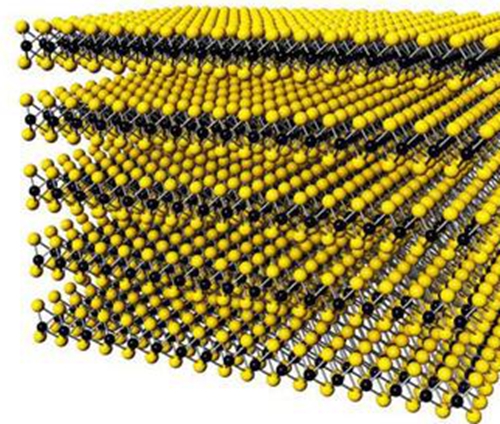 The synthesis and preparation of molybdenum disulfide
Putting hydrochloric acid and hydrofluoric acid together in direct steam heating, then repeatedly stirring those two materials, washing them with hot water, centrifugal, drying, grinding, molybdenum concentrate can be made. Ammonium molybdate solution is permeated with hydrogen sulfide gas to form ammonium thiomolybdate. Hydrochloric acid is added to precipitate molybdenum trisulfide, then centrifuged, washed, dried and pulverized. Desulfurizating when the heat come to 950 ° C , and finally the molybdenum disulfide can be obtained. 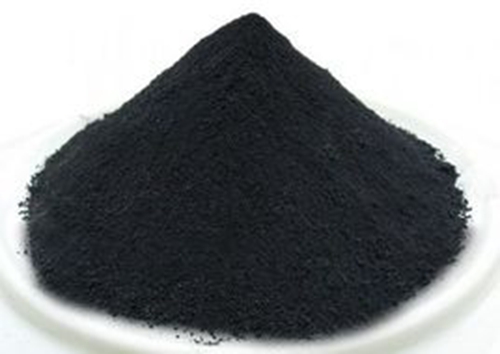 What can molybdenum disulfide be used for?

Advantages of molybdenum disulfide
1.It completely eliminate the oil spill, so as to greatly promote civilized production.
2.It can save a lot of grease.
3.It can improve the operation technology, extend the maintenance cycle, reduce the labor intensity of maintenance workers, and save labor.
4. Due to the low friction coefficient of molybdenum disulfide, friction resistance between friction equipment is small, it can save power consumption.
5. It can reduce mechanical wear, extend the service life of friction equipment, reduce the loss of equipment parts, and improve the attendance of equipment.
6, The application of molybdenum disulfide lubrication can solve the technical key and improve work efficiency and accuracy.
7. Molybdenum disulfide has the function of filling and supplementing, which can restore the geometric size of some parts and extend the service life.
8. Molybdenum disulfide is moisture-proof, water-proof, alkali-proof and acid-proof.
9. The application of molybdenum disulfide plastic or powder to smelt molding parts can save a lot of non-ferrous metals.
10 Some equipment using molybdenum disulfide lubrication can reduce the complexity of oil supply system,and can greatly simplify the structure of the equipment, increase the relative area of the utilization rate, at the same time, it will also cause a major reform in the equipment design.
To sum up, molybdenum disulfide solid lubricating base is indeed a new type of lubricating material in line with "more, faster, better and more economical", which should be vigorously promoted and applied. 
The difference between molybdenum disulfide and graphite
When it comes to the difference between molybdenum disulfide and graphite, we need to consider various factors. The most obvious difference is that the low friction coefficient of molybdenum disulfide often exceeds that of graphite. Molybdenum disulfide can be used as a new material for making transistors. Compared with graphene, which is also a two-dimensional material, molybdenum disulfide has an energy band gap of 1.8eV, while graphene has no energy band gap. Therefore, molybdenum disulfide may have a wide application space in the field of nano transistors. And electron mobility of the single-layer molybdenum disulfide transistor up to about 500 cm ^ 2 / (v. s), current switch rate of 1 x 10 ^ 8.
Here are their specific differences:
Because there is no vapor between the lattice plates of molybdenum, molybdenum disulfide is effective under high vacuum conditions, while graphite does not work.Particle size and film thickness are important parameters to match the surface roughness of lubrication elements. The choice of grain size of roughing surface is much larger than that of finishing surface, such as hob gear. MoS2 at 400 ° C (752 ° F) temperature limit is caused by oxidation. MoS2 is slowly oxidized in an atmosphere of up to 600 degrees Fahrenheit. In dry, oxygen-free conditions, it acts as a lubricant up to 1,300 degrees fahrenheit. The oxidation products of molybdenum disulfide are molybdenum trioxide (mo3) and sulfur dioxide. MoS3 is hygroscopic and it causes many friction problems in the standard atmosphere. Mos3 is the preferred metal form and is primarily used as an additive to a variety of other metals.
Graphite has both metallic and nonmetallic properties. The properties of metals include thermal conductivity and electrical conductivity. Non-metallic properties include inertia, high heat resistance and lubricity.
Graphite has excellent lubrication performance, as long as there is water, the lubrication performance of up to 1450 ° F, release and preventing performance of up to 2400 ° F or so. The oxidation product is carbon dioxide. Graphite is rarely used in deep space applications because it does not work well as a lubricant in a hard vacuum due to the requirement for entrained water vapor.
Whether it is molybdenum disulfide or graphite, their specific use is determined by professionals, especially in aerospace, which requires a lot of research to determine.  New major development of the application of molybdenum disulfide
Using a two-dimensional material called molybdenum disulfide, the researchers designed an atomically thin device 10 trillion times smaller than the human eardrum, which can receive and send signals over a radio frequency range with the advantages of tunability and large dynamic range.
TRUNNANO (Luoyang Trunnano Tech Co., Ltd ) is a professional Molybdenum disulfide manufacturer with over 12 years experience in chemical products research and development. If you are looking for high quality Molybdenum disulfide, please feel free to contact us and send an inquiry.
Molybdenum disulfide is the main component of molybdenite. It is usually presented in the form of black solid powder with metallic luster. Its chemical formula is MoS2, and its melting point is 1185 ℃,its density is 4.80 g/cm3 (14 ℃), and its mohs hardness is 1.0 ~ 1.5.
Putting hydrochloric acid and hydrofluoric acid together in direct steam heating, then repeatedly stirring those two materials, washing them with hot water, centrifugal, drying, grinding, molybdenum concentrate can be made. Ammonium molybdate solution is permeated with hydrogen sulfide gas to form ammonium thiomolybdate. Hydrochloric acid is added to precipitate molybdenum trisulfide, then centrifuged, washed, dried and pulverized. Desulfurizating when the heat come to 950 ° C , and finally the molybdenum disulfide can be obtained.
- Molybdenum sulfide is an important solid lubricant, especially suitable for high temperature and pressure. It also has diamagnetism, which can be used as a linear photoconductor and show P or N type semiconductor conductivity, rectification and energy conversion. Molybdenum disulfide can also be used as a catalyst for dehydrogenation of complex hydrocarbons.
- Molybdenum disulfide is a solid powder made of natural molybdenum concentrate after chemical purification and changing its molecular structure. This product is black with silver grey, metallic luster, with a greasy touch, insoluble in water. The product has the advantage of good dispersibility and non-adhesion, and can be added in various grease to form a non-adhesion colloid state, which can increase the lubricity and extreme pressure of grease. It is also suitable for high temperature, high pressure, high speed and high load mechanical working state, prolong the life of the equipment.
- The main function of molybdenum disulfide used in friction materials is to reduce friction at low temperature and to increase friction at high temperature.
- Anti-friction: the particle size of molybdenum disulfide processed by supersonic airflow pulverization reaches 325-2500 mesh, the micro-particle hardness is 1-1.5, and the friction coefficient is 0.05-0.1, so it can play an anti-friction role in friction materials.
- Friction: molybdenum disulfide does not conduct electricity, which is the copolymer among molybdenum disulfide, molybdenum trisulfide and molybdenum trioxide. When the temperature of the friction material increases sharply due to friction, the molybdenum trioxide particles in the copolymer expand with the temperature rising and play a role in increasing friction.
- Oxidation prevention: molybdenum disulfide is obtained by chemical purification comprehensive reaction, and its PH value is 7-8, slightly alkaline. It covers the surface of the friction material, which can protect other materials, prevent them from being oxidized, especially make other materials not easy to fall off, adhesion force enhancement.
Advantages of molybdenum disulfide
1.It completely eliminate the oil spill, so as to greatly promote civilized production.
2.It can save a lot of grease.
3.It can improve the operation technology, extend the maintenance cycle, reduce the labor intensity of maintenance workers, and save labor.
4. Due to the low friction coefficient of molybdenum disulfide, friction resistance between friction equipment is small, it can save power consumption.
5. It can reduce mechanical wear, extend the service life of friction equipment, reduce the loss of equipment parts, and improve the attendance of equipment.
6, The application of molybdenum disulfide lubrication can solve the technical key and improve work efficiency and accuracy.
7. Molybdenum disulfide has the function of filling and supplementing, which can restore the geometric size of some parts and extend the service life.
8. Molybdenum disulfide is moisture-proof, water-proof, alkali-proof and acid-proof.
9. The application of molybdenum disulfide plastic or powder to smelt molding parts can save a lot of non-ferrous metals.
10 Some equipment using molybdenum disulfide lubrication can reduce the complexity of oil supply system,and can greatly simplify the structure of the equipment, increase the relative area of the utilization rate, at the same time, it will also cause a major reform in the equipment design.
To sum up, molybdenum disulfide solid lubricating base is indeed a new type of lubricating material in line with "more, faster, better and more economical", which should be vigorously promoted and applied.
The difference between molybdenum disulfide and graphite
When it comes to the difference between molybdenum disulfide and graphite, we need to consider various factors. The most obvious difference is that the low friction coefficient of molybdenum disulfide often exceeds that of graphite. Molybdenum disulfide can be used as a new material for making transistors. Compared with graphene, which is also a two-dimensional material, molybdenum disulfide has an energy band gap of 1.8eV, while graphene has no energy band gap. Therefore, molybdenum disulfide may have a wide application space in the field of nano transistors. And electron mobility of the single-layer molybdenum disulfide transistor up to about 500 cm ^ 2 / (v. s), current switch rate of 1 x 10 ^ 8.
Here are their specific differences:
Because there is no vapor between the lattice plates of molybdenum, molybdenum disulfide is effective under high vacuum conditions, while graphite does not work.Particle size and film thickness are important parameters to match the surface roughness of lubrication elements. The choice of grain size of roughing surface is much larger than that of finishing surface, such as hob gear. MoS2 at 400 ° C (752 ° F) temperature limit is caused by oxidation. MoS2 is slowly oxidized in an atmosphere of up to 600 degrees Fahrenheit. In dry, oxygen-free conditions, it acts as a lubricant up to 1,300 degrees fahrenheit. The oxidation products of molybdenum disulfide are molybdenum trioxide (mo3) and sulfur dioxide. MoS3 is hygroscopic and it causes many friction problems in the standard atmosphere. Mos3 is the preferred metal form and is primarily used as an additive to a variety of other metals.
Graphite has both metallic and nonmetallic properties. The properties of metals include thermal conductivity and electrical conductivity. Non-metallic properties include inertia, high heat resistance and lubricity.
Graphite has excellent lubrication performance, as long as there is water, the lubrication performance of up to 1450 ° F, release and preventing performance of up to 2400 ° F or so. The oxidation product is carbon dioxide. Graphite is rarely used in deep space applications because it does not work well as a lubricant in a hard vacuum due to the requirement for entrained water vapor.
Whether it is molybdenum disulfide or graphite, their specific use is determined by professionals, especially in aerospace, which requires a lot of research to determine.
Using a two-dimensional material called molybdenum disulfide, the researchers designed an atomically thin device 10 trillion times smaller than the human eardrum, which can receive and send signals over a radio frequency range with the advantages of tunability and large dynamic range.
TRUNNANO (Luoyang Trunnano Tech Co., Ltd ) is a professional Molybdenum disulfide manufacturer with over 12 years experience in chemical products research and development. If you are looking for high quality Molybdenum disulfide, please feel free to contact us and send an inquiry.
Leave a Reply
Your email address will not be published.Required fields are marked. *